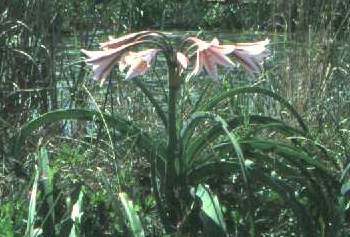
Crinum bulbispermum (Burm.f.) Milne-Redh. & Schweick.Common names: Orange River lily, Vaal River Lily; Oranjerivierlelie
(A); Umnduze (Z). |
||||
|
The Orange River lily is a large bulbous plant up to 1m high, which produces attractive grey green gracefully arching leaves during the summer months. A tall stem bearing large, hanging, lily-type flowers which are white with a pink to red stripe in each petal, is produced early in the growing season. The word "Krinon" means lily and the specific epithet refers to the bulblike shape and size of the seed. Crinum bulbispermum is a highly attractive garden subject and can be grown all over South Africa provided it is given adequate water during its growing season. It does prefer the wetter parts of the country and does very well if planted in soggy soils. This is a good plant for swamp or water gardens. Although this plant is widespread, it occurs naturally mainly on the highveld areas of the eastern hinterland wherever conditions allow. In nature it grows along stream banks and in swampy grasslands that usually dry out during the winter months when these plants are dormant. The sickly-sweet scented flowers are pollinated by insects. Once the flowers fall they are followed by the large attractive pink fruit capsules containing few to many bulbous seeds which germinate as soon as they fall to the ground. The large bulb is protected from drying out during the dry winter months by many layers of papery dry bulb scales. This plant is used in traditional healing for the common cold, rheumatism, varicose veins, reduction of swelling and the treatment of septic sores. It is also used during the delivery of babies and to stimulate breast milk. Local people believe that this plant protects homes from evil. Growing Crinum bulbispermum The Orange River Lily is easily propagated by seed and is quick growing, reaching flowering age after three to four years. The large irregularly shaped seed can be sown in deep trays or directly into the garden where they should be just covered and watered well. Seed viability is short-lived, so sow them as soon as possible. The bulblets are susceptible to attack by Amaryllis caterpillar which will also attack adult plants and can be responsible for much damage or even the demise of the plant, especially young bulbs. Adult plants are best grown in deep soils that receive and hold a lot of water during the growing season. They can be transplanted but ideally should be left to grow in the same place without disturbance. They require full sun and plenty of water although they can endure periods of drought during their growing season without adverse effects. They also make good container plants. In nature they survive summer temeratures of up to 40°C and cold dry winters of -8°C. This plant belongs to a large group of plants that are found widespread around the globe with many in Africa, some water loving and many with astoundingly attractive flowers. They belong to the family Amaryllidaceae, which includes highly prized groups of bulbous, lily-like plants that are grown extensively in commercial horticulture and floriculture. Among the other genera found in southern Africa are: Brunsvigia, Nerine, Cyrtanthus, Haemanthus, Scadoxus and Amaryllis. There are about 20 other species of Crinum in southern Africa. References:
Andrew Hankey |
||||
|
This page forms part of the South African National Biodiversity Institute's plant information website www.plantzafrica.com.
|